



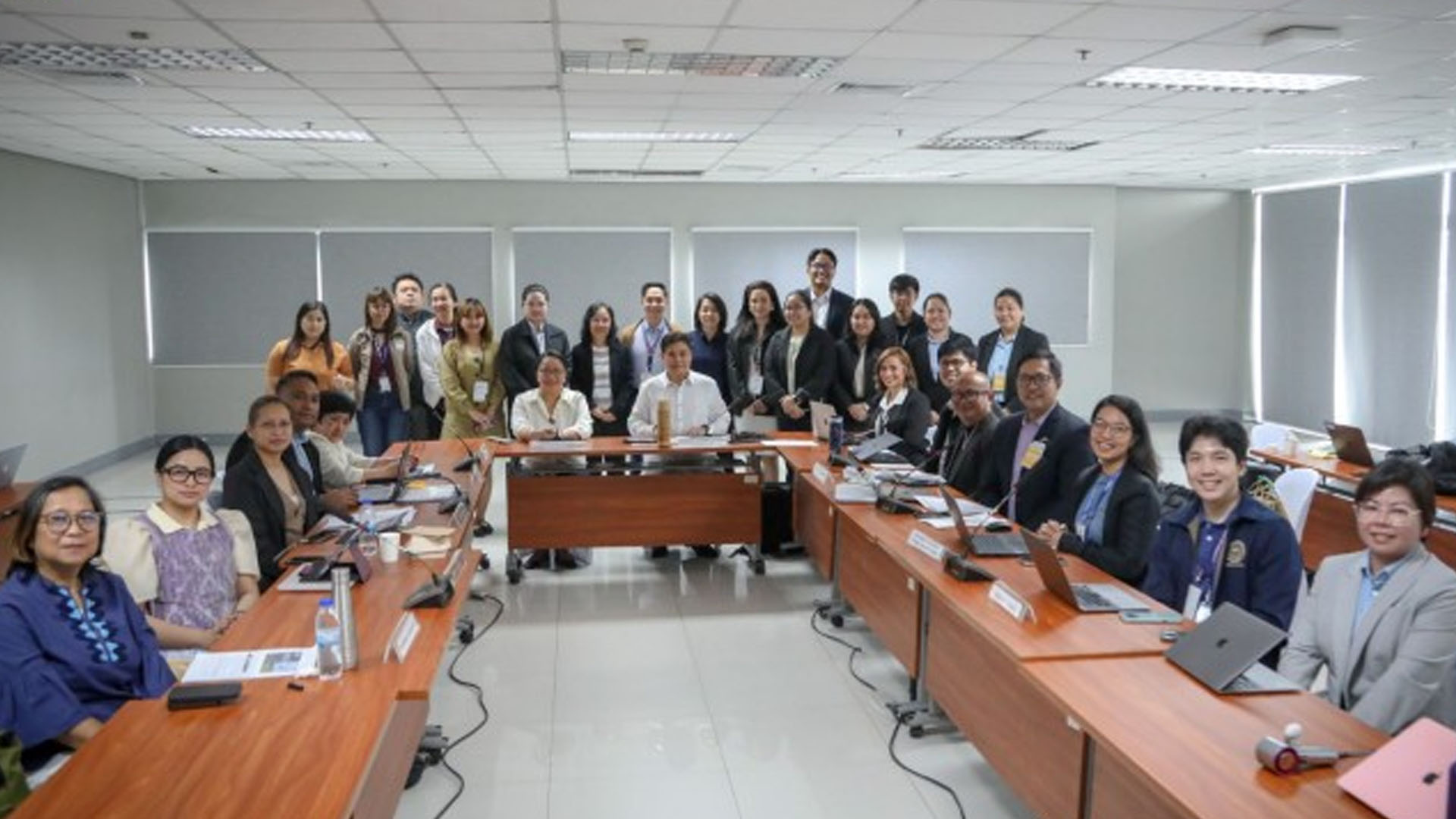







The Climate Change Commission (CCC) convened over 200 stakeholders on March 26 to refine the Philippines’ updated Nationally Determined Contribution (NDC) to climate action ahead of its submission to the United Nations Framework Convention on Climate Change (UNFCCC).
CCC Vice Chairperson and Executive Director Robert E.A. Borje underscored the importance of the consultation in ensuring coherence and readiness for implementation.
“This NDC reflects a one-country team approach: A whole-of-government alignment in policy and planning, a whole-of-economy approach to analysis and the mobilization of investment and systems, and a whole-of-society engagement that keeps our actions grounded and credible,” Borje said, as quoted in a news release Tuesday.
The draft NDC 2026 text — developed by national government agencies — was presented to stakeholders from civil society organizations, marginalized groups, academia, the private sector and development partners. The consultation aimed to validate its clarity and technical soundness and to identify remaining gaps ahead of submission.
“Importantly, this updated NDC integrates elements that enable delivery—just transition considerations, strengthened climate finance and other means of implementation, nature-based solutions, and more robust systems for transparency and monitoring,” Borje said.
CCC Commissioner Rachel Anne Herrera said the consultation inputs would be reviewed and reflected in the final text.
“Today’s consultation makes clear that the direction we are taking is being tested against real conditions on the ground. The NDC is being shaped by the very people and institutions who will help carry it forward,” Herrera said.
John Leo Algo of Aksyon Klima, a civil society organization, said this year’s NDC consultations showed progress in transparency and inclusivity.
“More consultations were held by the CCC and other agencies nationwide, and we from civil society also conducted our own to ensure more voices are brought to the policymaking table. While improvements such as timelier communications and feedback on how stakeholder inputs are integrated into the document should be made, this was a step in the right direction towards a ‘whole-of-society’ approach to climate action,” he said.
The NDC serves as the country’s roadmap for reducing greenhouse gas emissions and strengthening climate action.
In its 2021 submission, the Philippines committed to a projected 75 percent reduction in emissions from 2020 to 2030.
The targets cover key sectors and their responsible agencies. Energy is led by the Department of Energy; transport by the Department of Transportation; industrial processes and product use, waste, and forest and other land use by the Department of Environment and Natural Resources (DENR); and agriculture by the Department of Agriculture.
The NDC 2026 is co-led by the CCC and DENR, in coordination with national government agencies and development partners.
The NDC advances the priorities of President Ferdinand R. Marcos Jr. for a climate-smart and climate-resilient Philippines, supporting the country’s transition toward low-carbon development, strengthened climate resilience, and inclusive economic growth. (PNA)